
Case Study
Andimeshk Stadium
Execution of the Andimeshk Stadium curved roof with a sandwich panel system over a 6,000 m² large-span envelope — controlling curved geometry, drainage paths, and waterproofing continuity.
A SIPANEL reference for curved, large-span industrial roof envelopes.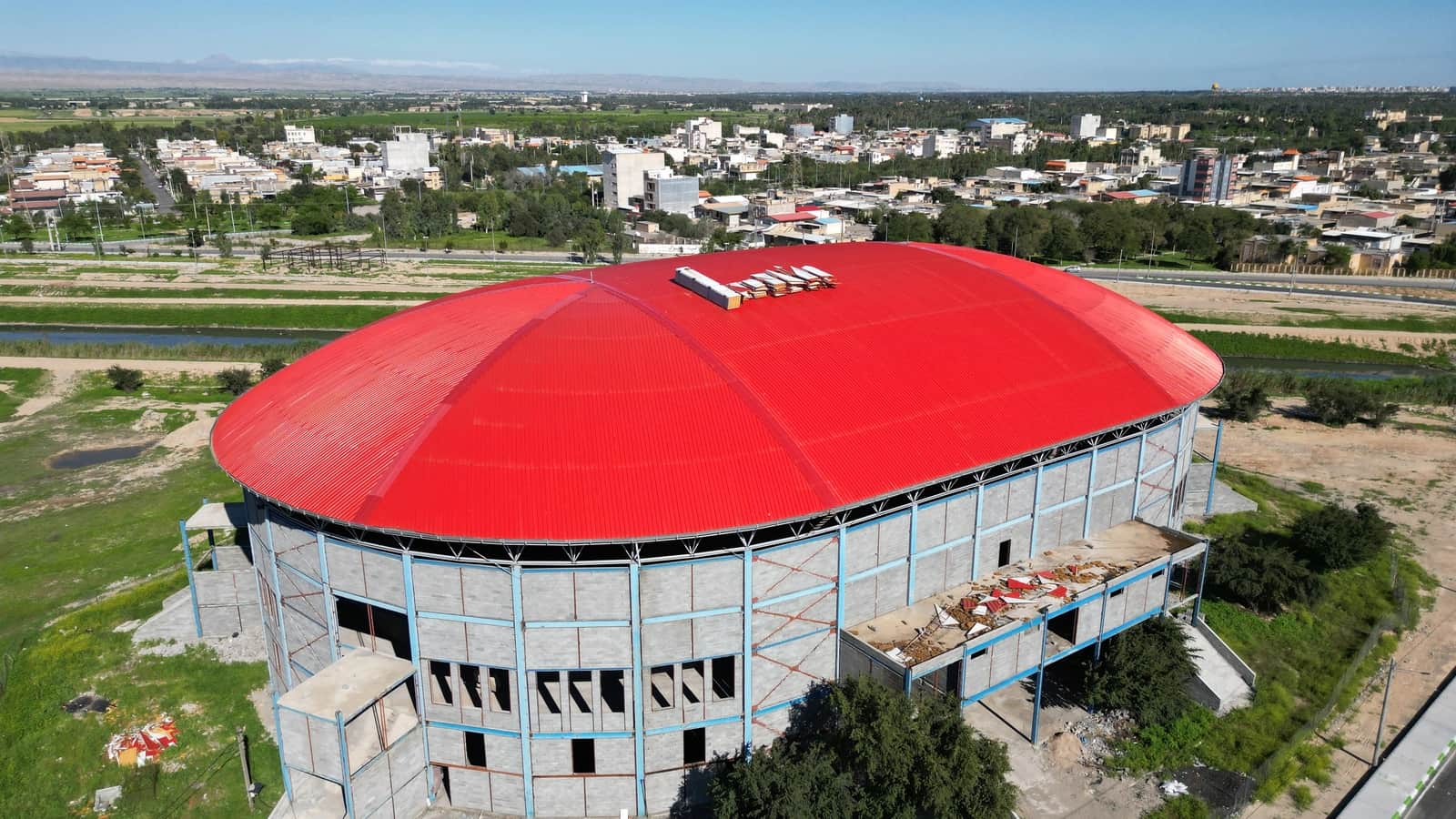
Case Study
Project snapshot
Project challenge
Andimeshk Stadium required a large-span curved roof where curved geometry, panel alignment, drainage on the curved surface, and waterproofing continuity all had to be controlled together. Small alignment deviations on the curved surface could cause joint discontinuity, standing water, and leakage.
- Controlling curved geometry and panel alignment on a curved surface
- Designing a continuous drainage path across the curved roof with no standing-water points
- Maintaining waterproofing continuity at joints and roof penetrations
- Controlling panel deformation and thermal movement across the large span
Engineering decision
SIPANEL engineered a coordinated sandwich panel roofing system matched to the stadium's curved structure — including curvature-based panel layout optimisation, integrated waterproofing detailing, and panel-to-structure coordination.
Before installation, the engineering team prepared structural alignment studies, curved-surface panel layout drawings, drainage coordination details, and an installation sequence to secure geometric accuracy and long-term roof performance.
A sandwich panel roof system was selected for its high strength-to-weight ratio, continuous insulated envelope, and suitability for curved surfaces over this span.
Panel layout, drainage paths, and penetration locations were coordinated with the structure and architecture before installation to minimise joints and leak points on the curved surface.
Execution detail
Installation sequence
Installation followed an engineered sequence: setting out from the roof geometry reference, alignment control at inspection checkpoints, connection coordination, and stage-by-stage joint waterproofing checks to preserve curvature accuracy and envelope continuity.
Procurement control
Panels and waterproofing accessories were supplied to suit the curved layout and span lengths, reducing on-site cutting and waste while maintaining dimensional fit.
Coordination with site team
Execution proceeded with continuous coordination between the engineering team and the site installation crew, based on approved drawings.
Quality checkpoints
- Panel alignment and geometric fit checks on the curved surface
- Drainage path continuity inspection before envelope completion
- Joint and penetration waterproofing monitoring
Measured result
Risks controlled before publication
Curved roof geometry and panel alignment
Risk: alignment deviation on the curved surface causes joint discontinuity and a poor finish. SIPANEL control: setting out from the roof geometry reference with staged alignment inspection. Why it matters: a continuous, accurate envelope with the intended architectural appearance.
Drainage path on the curved surface
Risk: standing-water points on a curved roof add load and cause leaks. SIPANEL control: a continuous drainage path, inspected before the envelope is closed. Why it matters: reliable rainwater removal and reduced long-term leak risk.
Deformation control across the large span
Risk: panel deformation and thermal movement across a long span create stress and joint opening. SIPANEL control: layout and connection detailing matched to span length and thermal movement. Why it matters: a stable roof with less need for repair.
Joint and penetration waterproofing
Risk: joints and roof penetrations are the most leak-prone points. SIPANEL control: integrated waterproofing detailing and joint monitoring during installation. Why it matters: a watertight, dependable envelope throughout service life.
Related Case Studies
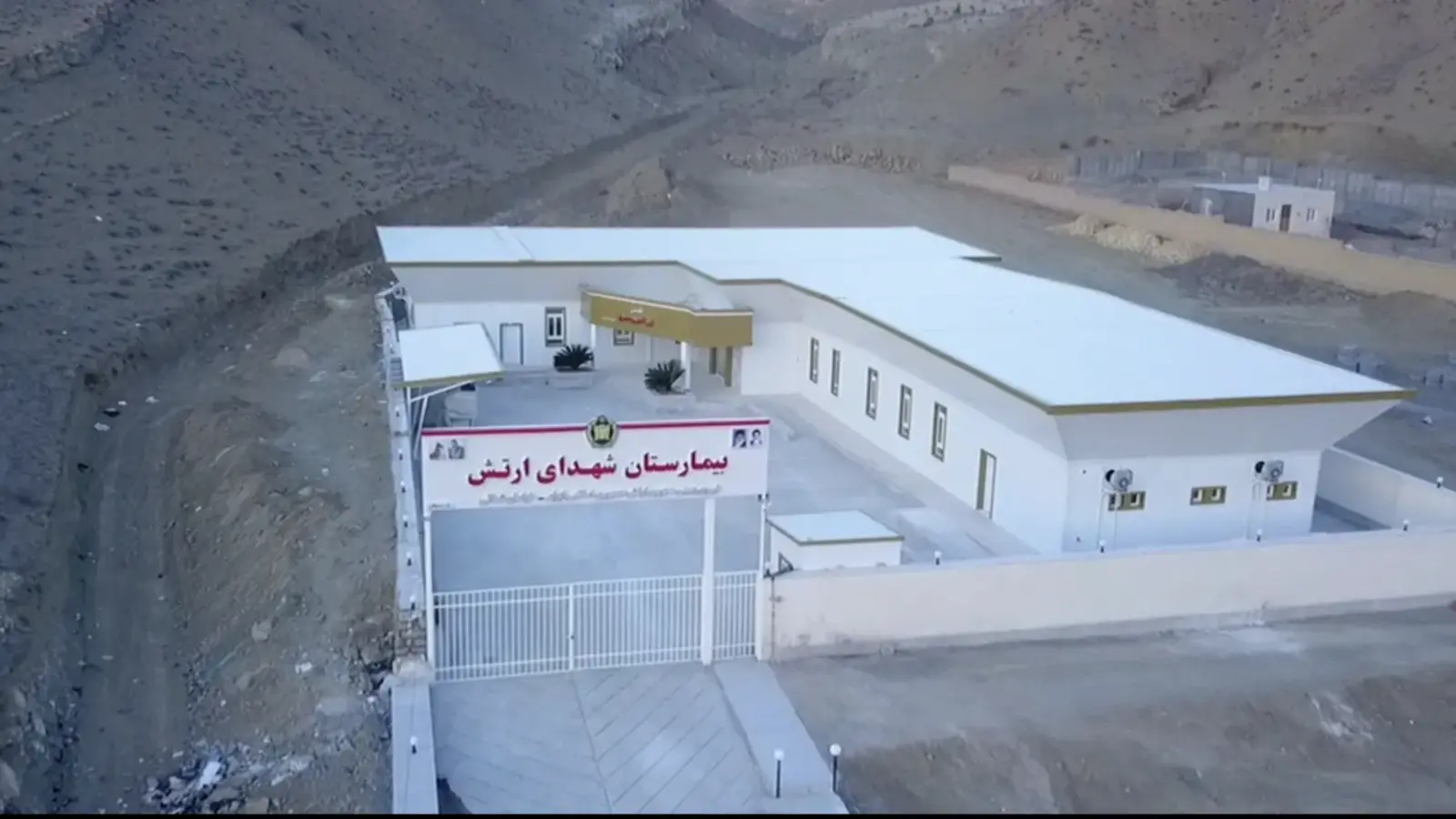
32-Bed Military Hospital
Raz & Jargalan, North Khorasan, Iran
- Challenge
- During the COVID-19 emergency, a fully operational 32-bed military hospital was needed from excavation to readiness in under 50 days, requiring full EPC coordination.
- Engineering decision
- Engineering teams coordinated full EPC delivery — from excavation and structural construction to sandwich panel envelope, internal partitions, and final readiness — within an emergency timeline.
- Result
- A fully operational 32-bed military hospital was delivered from excavation to readiness in less than 50 days during the COVID-19 emergency.

Ahvaz Airport Passenger Terminal
Ahvaz, Iran
- Challenge
- The passenger terminal included a curved front architectural feature where the covering had to bend in a perpendicular direction. That made geometry control, substructure alignment, aluminium panel layout, ZIP-TECH transitions, and final visual quality the main execution risks.
- Engineering decision
- The engineering decision was to control geometry first: define curved references, coordinate panel and roofing interfaces, then execute the covering without interrupting the architectural line.
- Result
- 4,000 m² of ZIP-TECH and aluminium cladding were executed while preserving the curved architectural form and final visual quality.

Mehrabad Aircraft Hangar
Tehran, Iran
- Challenge
- The hangar application required accurate sandwich panel covering over a continuous curved structure. Installation access, panel alignment, substructure coordination, and roof-wall transitions all affected weather protection and visual continuity.
- Engineering decision
- Engineering teams defined installation references from the hangar geometry, coordinated support points, and reviewed transition details before site installation.
- Result
- A 5,000 m² sandwich panel covering was executed while maintaining the continuous curved form of the aircraft hangar.

Mahshahr Taxi Parking Facility
Bandar Mahshahr, Khuzestan, Iran
- Challenge
- The parking facility needed a durable sandwich panel roof for a high-use transport environment in Bandar Mahshahr. The useful engineering challenge was not only panel supply; it was keeping rainwater movement predictable through slopes, gutters, flashings, downspouts, and sealed transitions in a coastal climate.
- Engineering decision
- The engineering decision was to treat drainage as part of the roof system instead of a later accessory. Slopes, water-flow paths, gutter locations, and panel alignment were coordinated before installation.
- Result
- A 4,000 m² sandwich panel roofing system was delivered with coordinated rainwater management and controlled weather-protection detailing.

Kermanshah Industrial University Petroleum Faculty
Kermanshah, Iran
- Challenge
- The petroleum-faculty building required structural glass facade connections that could tolerate relative movement in the primary structure and reduce the risk of transferring displacement into brittle glass panels.
- Engineering decision
- The engineering decision was to separate glass performance from uncontrolled structural movement by using connection details that reduce stress transfer into the panels.
- Result
- Approximately 1,000 m² of structural glass facade was executed. The project record states that the facade reportedly remained without glass damage during the Kermanshah earthquake in the 1390s Solar Hijri decade.
Have a curved roof or a large-span project?
Send the drawings or specifications for your curved roof, stadium, or large-span envelope, and the SIPANEL engineering team will review the geometry, drainage, and waterproofing details and propose an execution approach.