
Industrial Waterproof Roofing
Standing Seam Roofing Built Around Waterproofing Logic
SIPANEL coordinates roof slope, drainage paths, seams, flashings, gutters, penetrations, and concealed fastening details to reduce leakage risk before installation begins.
Technical review for industrial roof drainage, flashing details, and controlled installation.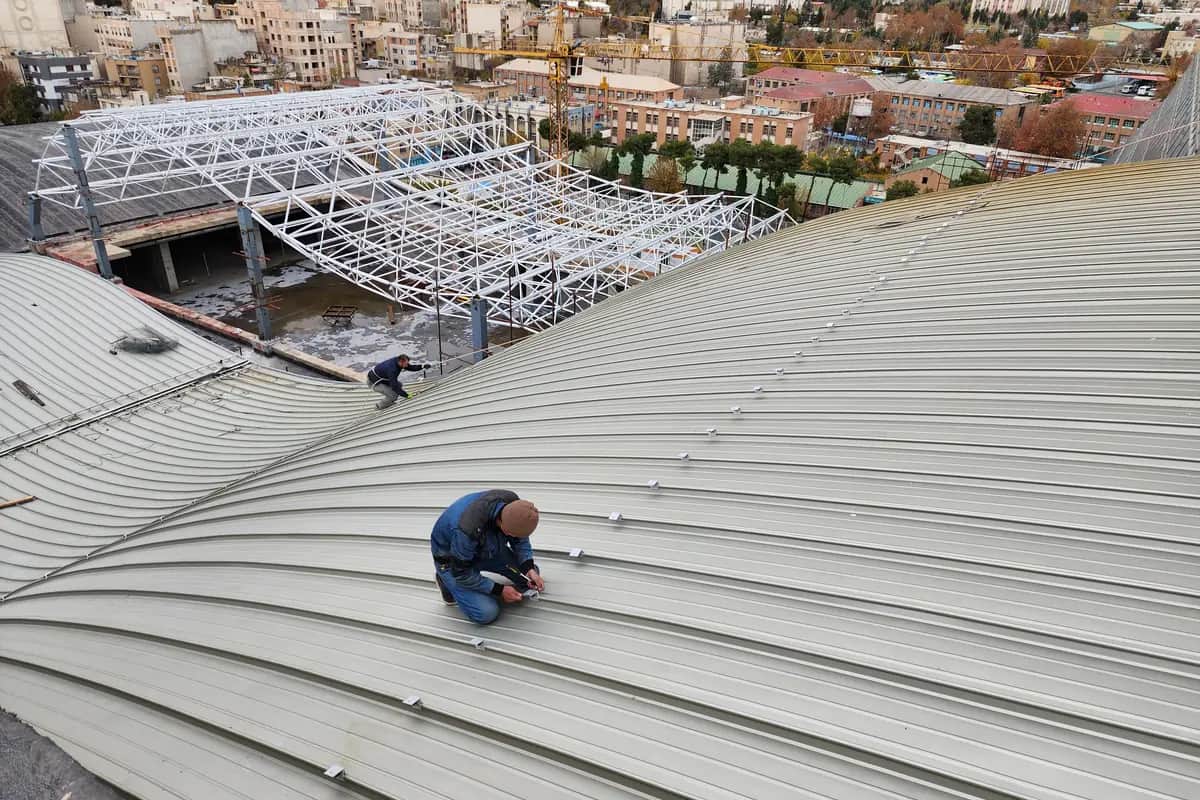
Roof Leakage Is Usually a Coordination Problem
Weak drainage planning: poor slope, gutter, or downspout coordination creates standing water and long-term leakage risk
Incorrect flashing details: edges, ridges, valleys, and wall connections need precise details before execution
Uncontrolled penetrations: skylights, vents, ducts, and service openings create risk when not detailed correctly
Exposed fastener risk: incorrect fastening strategy increases the chance of water ingress and maintenance problems
Thermal movement and installation sequence: large roof surfaces need movement-aware detailing and a controlled installation sequence — without this coordination, even good materials fail
Related Roofing Projects
Results from real projects executed with SIPANEL engineering coordination.

Ahvaz Airport Passenger Terminal
Ahvaz, Iran — 4,000 m²
- Challenge
- Curved front architectural feature required perpendicular ZIP-TECH panel bending, geometric control of the curved form, and precise coordination between substructure and panels.
- Result
- Successful execution of 4,000 m² ZIP-TECH and aluminium cladding while preserving the curved architectural form and final visual quality.

Megapars Mall Atrium
Iran — 4,500 m²
- Challenge
- Large-span commercial atrium roof required curved ZIP panel coordination, waterproofing integrity, thermal movement control, and architectural integration.
- Result
- Atrium roof delivered with reliable waterproofing, precise standing seam execution, and controlled long-span installation quality.

Shahr Babak Wrestling Hall
Shahr Babak, Kerman, Iran — 900 m²
- Challenge
- Multiple dome-shaped sports halls required curved ZIP panel coordination, structural alignment, waterproofing continuity, and visually consistent roof finishing.
- Result
- Three structurally coordinated dome-shaped wrestling halls delivered with reliable ZIP panel roof performance and controlled installation quality.
How SIPANEL Engineers Roofing Risk Before Execution
Shop Drawing Coordination
Sheet layout, seam paths, flashing details, clip positions, and installation sequence are documented before procurement.
BOM & Material Planning
Sheets, clips, fasteners, gutters, trims, flashings, and drainage accessories are planned to reduce waste and site delays.
Installation Planning
Installation sequence, waterproofing logic, penetration details, and inspection checkpoints are defined before site work begins.
Quality Control
Slope, seam alignment, flashing positions, penetration sealing, and fastening logic are inspected at defined checkpoints.
Independent Roofing System Recommendations
SIPANEL operates as a roofing system engineer, not a sheet metal reseller. System selection is based on project conditions, not warehouse inventory.
Project-First System Selection
Profile type, fastening method, slope, and drainage details are reviewed based on climate, roof geometry, and project requirements.
Procurement Planning Support
Sheet quantities, clips, flashings, and accessories are coordinated with shop drawings to reduce shortages and site delays.
Installation Risk Coordination
Installation sequence, waterproofing details, and quality checkpoints are reviewed and defined before site work begins.
Typical Roofing Installation
- Material selected before drainage review
- Flashing decisions made on site
- Penetrations handled reactively
- Accessories missing or delayed
- Quality depends on installer habit
SIPANEL Engineering Approach
- Roof geometry and drainage reviewed early
- Flashing logic coordinated before installation
- Penetrations detailed as part of the system
- Accessories planned before procurement
- Execution follows checkpoints and technical control
Where Standing Seam Roofing Fits
Engineering Proof Before Installation

Roof Shop Drawing
Sheet layout, seam paths, and connection details coordinated before procurement.

Waterproofing Detail
Flashing, gutter, and roof joint sealing details reviewed before installation.

BOM / Material Takeoff
Sheet, clip, flashing, and accessory quantities coordinated with shop drawings.
Roofing Quality Checkpoints
- Slope, drainage path, and gutter coordination
- Seam alignment and clip positioning
- Flashing and edge detail review
- Penetration waterproofing check
- Fastening logic and thermal expansion review
- Post-installation inspection
Standing Seam Roofing Questions
Why is standing seam roofing suitable for industrial projects?
Standing seam roofing supports concealed fastening, clean seam control, and better waterproofing behavior when roof geometry, drainage, flashings, and installation sequence are engineered correctly.
What causes most industrial roof leakage?
Leakage often comes from weak drainage planning, poor flashing coordination, uncontrolled penetrations, exposed fastener issues, or installation sequence errors.
Does SIPANEL review drainage before installation?
Yes. SIPANEL reviews slope, drainage paths, gutters, downspouts, roof edges, and penetration conditions before installation planning.
What is the difference between supply-only roofing and engineering-controlled roofing?
Supply-only focuses on material delivery. Engineering-controlled roofing coordinates the complete waterproofing system — including details, procurement, installation sequence, and quality checkpoints.
Does SIPANEL provide roof shop drawings?
Yes. Sheet layout, seam paths, clip positions, flashings, and installation sequence are documented in shop drawings before procurement.
Is SIPANEL a supplier only or does it also handle installation?
SIPANEL provides engineering-controlled execution — from roof geometry review and shop drawings to procurement coordination and controlled installation with quality checkpoints.
How is thermal movement managed in long-span roofing?
Sliding clips, seam spacing, and movement-aware detailing are defined in shop drawings to control thermal stress across large roof surfaces.
How are waterproofing transitions at roof-wall connections controlled?
Flashing details, overlap logic, and sealing at plane-change points are reviewed before installation to reduce leakage risk at transition zones.
Review the Leakage Risk Before Roofing Starts
Request a technical roofing review for drainage, flashing, penetrations, and controlled installation planning.