
SIPANEL Technical Library
Engineering Resources for Better Industrial Envelope Decisions.
Practical guides, checklists, and technical references for sandwich panels, standing seam and ZIP roofing, aluminium cladding, waterproofing, flashing details, thermal insulation, and industrial envelope execution.
Built for project owners, contractors, engineers, architects, and procurement teams.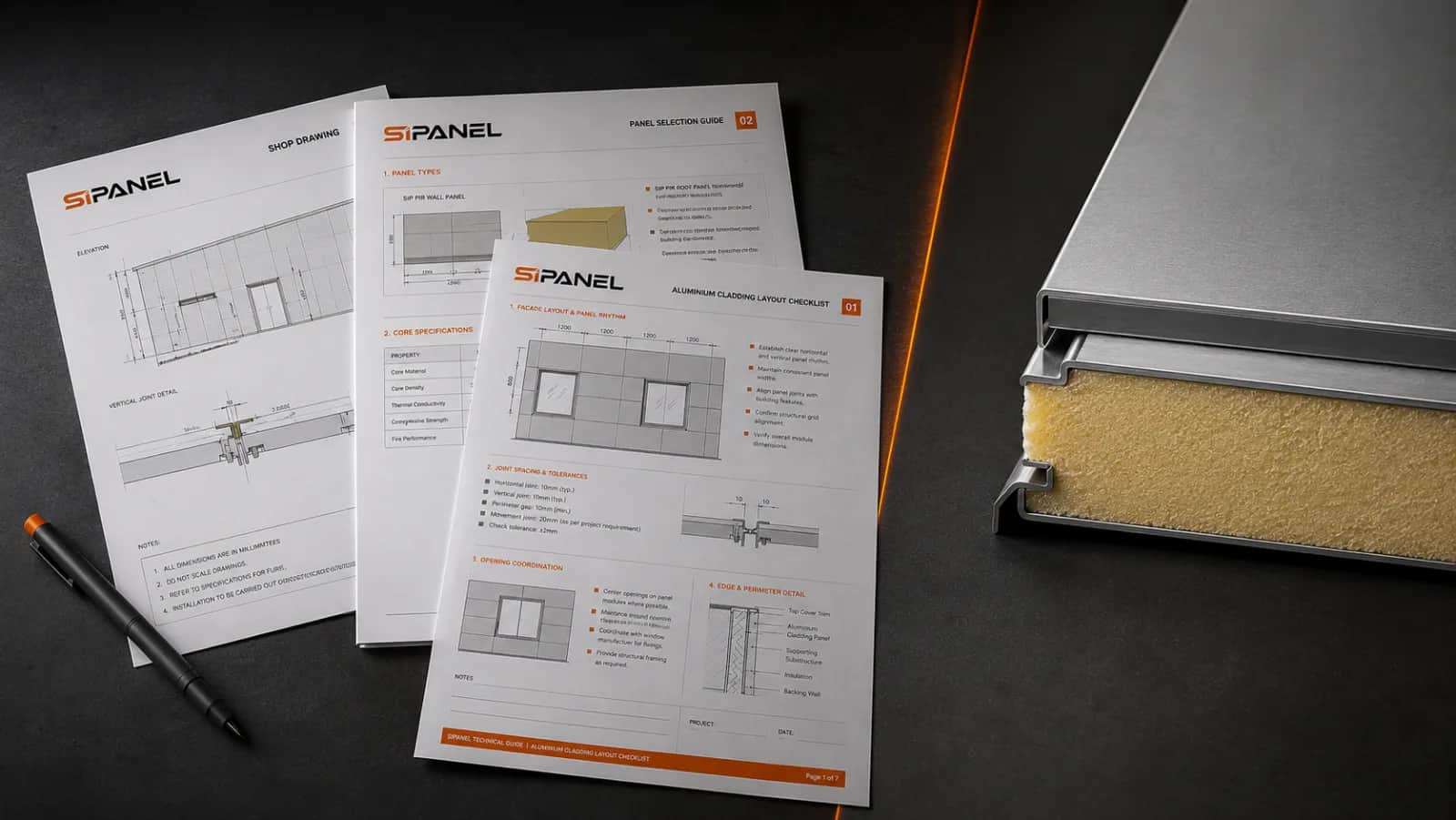
Featured Resources

Industrial Roof Leakage Prevention Checklist
A project-stage checklist for reviewing slope, drainage, flashings, penetrations, gutters, and installation risk before roofing starts.
- 8 pages
- 8 pages
- Reading time
- 8 min
- Updated
- Mar 2026

Sandwich Panel Selection Guide
A decision guide for choosing panel type, core material, thickness, joint logic, insulation level, and procurement inputs before ordering.
- 14 pages
- 14 pages
- Reading time
- 10 min
- Updated
- Mar 2026

Shop Drawing Review Guide for Panel Projects
A structured guide for checking panel layout, accessories, flashing logic, quantities, and execution coordination.
- 12 pages
- 12 pages
- Reading time
- 12 min
- Updated
- Feb 2026
Engineering Resource Library

Standing Seam Roof Detail Notes
Technical notes for seams, concealed fastening, roof movement, flashing connections, and drainage coordination.
- 6 pages
- 6 pages
- Reading time
- 9 min
- Updated
- Mar 2026

Aluminium Cladding Layout Checklist
A facade checklist for reviewing grid, panel rhythm, joints, fixing logic, edges, openings, and material optimization before installation.
- 7 pages
- 7 pages
- Reading time
- 7 min
- Updated
- Feb 2026

MTO and Procurement Planning Sheet
A structured worksheet for reviewing quantities, accessories, flashings, fasteners, trims, lead times, and procurement gaps.
- 5 pages
- 5 pages
- Reading time
- 6 min
- Updated
- Mar 2026
Frequently Asked Questions
Where should we start when selecting the right sandwich panel?
Start by reviewing building use, climate conditions, spans, structure type, insulation requirements, and installation details. SIPANEL technical guides are designed for this exact decision stage.
When is standing seam or ZIP roofing a better choice?
When long-term waterproofing, large spans, special architectural forms, or reducing water penetration risk are high priorities, standing seam or ZIP roofing can be the better option.
Do these resources replace engineering consultation?
No. These resources are designed for initial decision-making and error reduction. Final system selection requires reviewing drawings and site-specific project conditions.
Can I send project drawings for review before purchasing?
Yes. You can submit preliminary project information through the contact form or RFQ so the SIPANEL team can review the appropriate technical path.
What role do flashings and gutters play in industrial roof waterproofing?
Flashings seal the transitions between roof and wall, penetrations, and edges. Gutters collect and direct rainwater. If flashing installation sequence is not coordinated with gutters, leakage risk increases significantly.
How important is thermal insulation in sandwich panel selection?
Thermal insulation directly affects energy consumption, indoor conditions, and building operating costs. The panel core type (PIR, PUR, mineral wool) and thickness must match the climate and building use.
What does an industrial building envelope system include?
An industrial envelope includes the roofing system (sandwich panel, standing seam, or ZIP), wall system (panel or aluminium cladding), flashings, gutters, thermal insulation, and all connection and waterproofing accessories.
Explore Related Systems
Get Engineering Resources
Enter your contact details to receive technical resources directly.

Review the technical risks before selecting the right envelope for your project.
Envelope type, execution details, climate conditions, and installation method can directly affect cost, durability, and project performance. SIPANEL engineering can review the right technical path before procurement.
- Executed industrial project experience
- Engineering review before procurement
- Detail and installation coordination