
Case Study
Mehrabad Aircraft Hangar
A 5,000 m² aircraft-hangar envelope where curved geometry, access sequencing, substructure coordination, and roof-wall transitions controlled the final covering quality.
Verified scope: sandwich panel covering, space-frame coordination, substructure alignment, roof-wall transitions, and installation checks.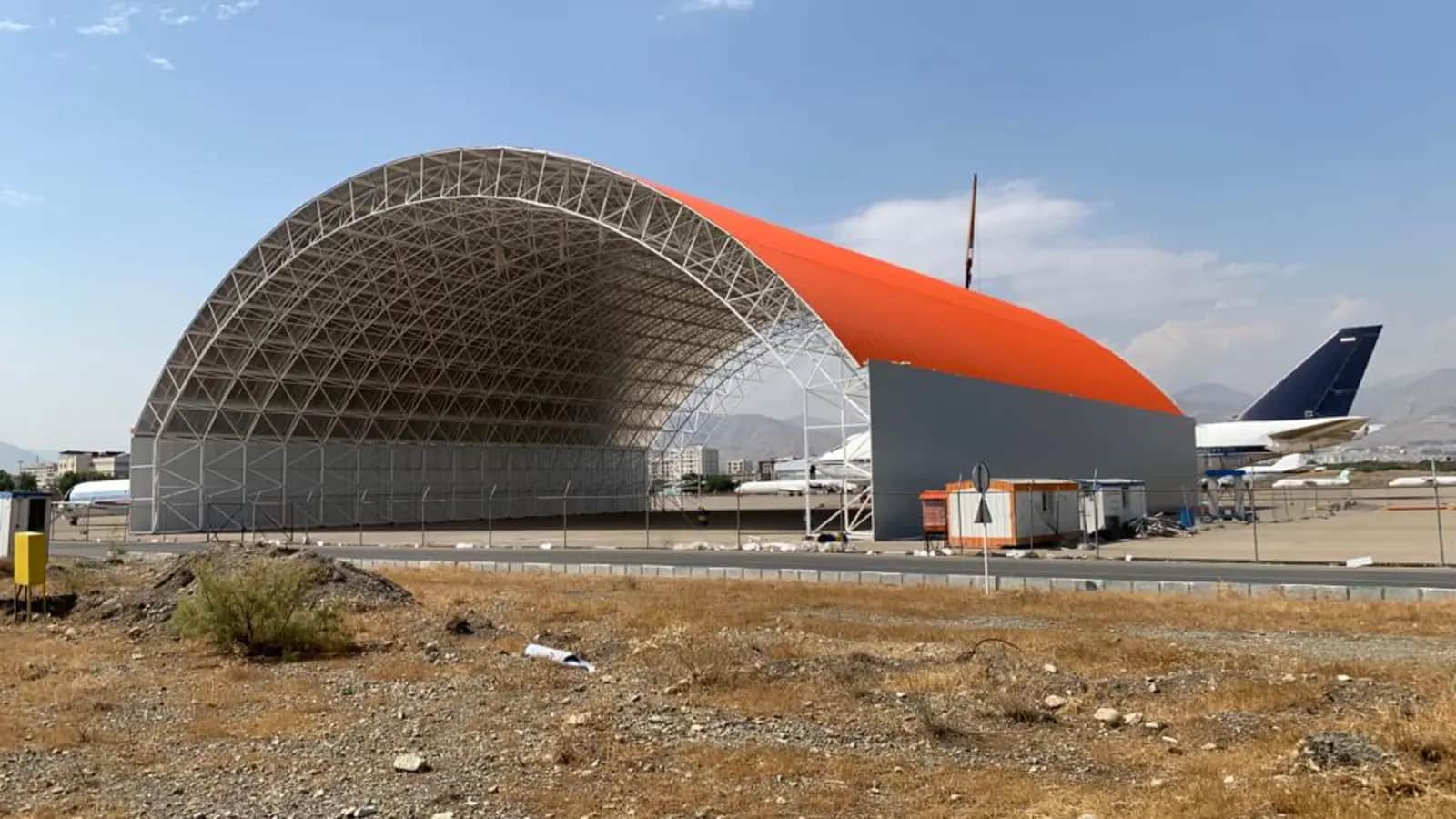
Case Study
Project snapshot
Project challenge
The hangar application required accurate sandwich panel covering over a continuous curved structure. Installation access, panel alignment, substructure coordination, and roof-wall transitions all affected weather protection and visual continuity.
- Maintaining panel alignment on a curved hangar envelope
- Coordinating covering details with the space frame and substructure
- Managing access and installation sequence on a large enclosure
- Controlling roof-wall transitions against water-ingress risk
Engineering decision
SIPANEL coordinated the space frame, substructure, panel layout, and installation sequence so the curved hangar form could be covered without losing geometric continuity.
Engineering teams defined installation references from the hangar geometry, coordinated support points, and reviewed transition details before site installation.
Sandwich panel covering was selected because it provides a lightweight, fast-installed industrial envelope that can be coordinated over curved roof and wall surfaces.
Roof-wall interfaces, support references, panel laps, and access sequencing were coordinated before installation to reduce late correction on the hangar envelope.
Execution detail
Installation sequence
Execution focused on controlled panel alignment over the curved surface, staged access, fastening checks, and transition detailing at roof and wall interfaces.
Procurement control
Panels, fasteners, flashings, and sealing accessories were coordinated with the approved layout so the field sequence could follow the curved geometry.
Coordination with site team
The installation crew worked from geometry references and staged access points so alignment checks could be completed before closing each work zone.
Quality checkpoints
- Curved-surface panel alignment review
- Roof-wall transition and flashing inspection
- Fastening and sealing check before zone handover
Measured result
Risks controlled before publication
Visual breaks on curved roof surface
Panel alignment was checked against hangar geometry references before each work zone was closed.
Installation errors on curved geometry
Staged access and installation sequencing reduced uncontrolled field adjustment.
Mismatch between structure and covering system
Substructure and support points were coordinated before panel installation.
Water ingress at roof-wall transitions
Flashings, laps, and sealing points at transitions were treated as quality checkpoints.
Related Case Studies
32-Bed Military Hospital
Raz & Jargalan, North Khorasan, Iran
- Challenge
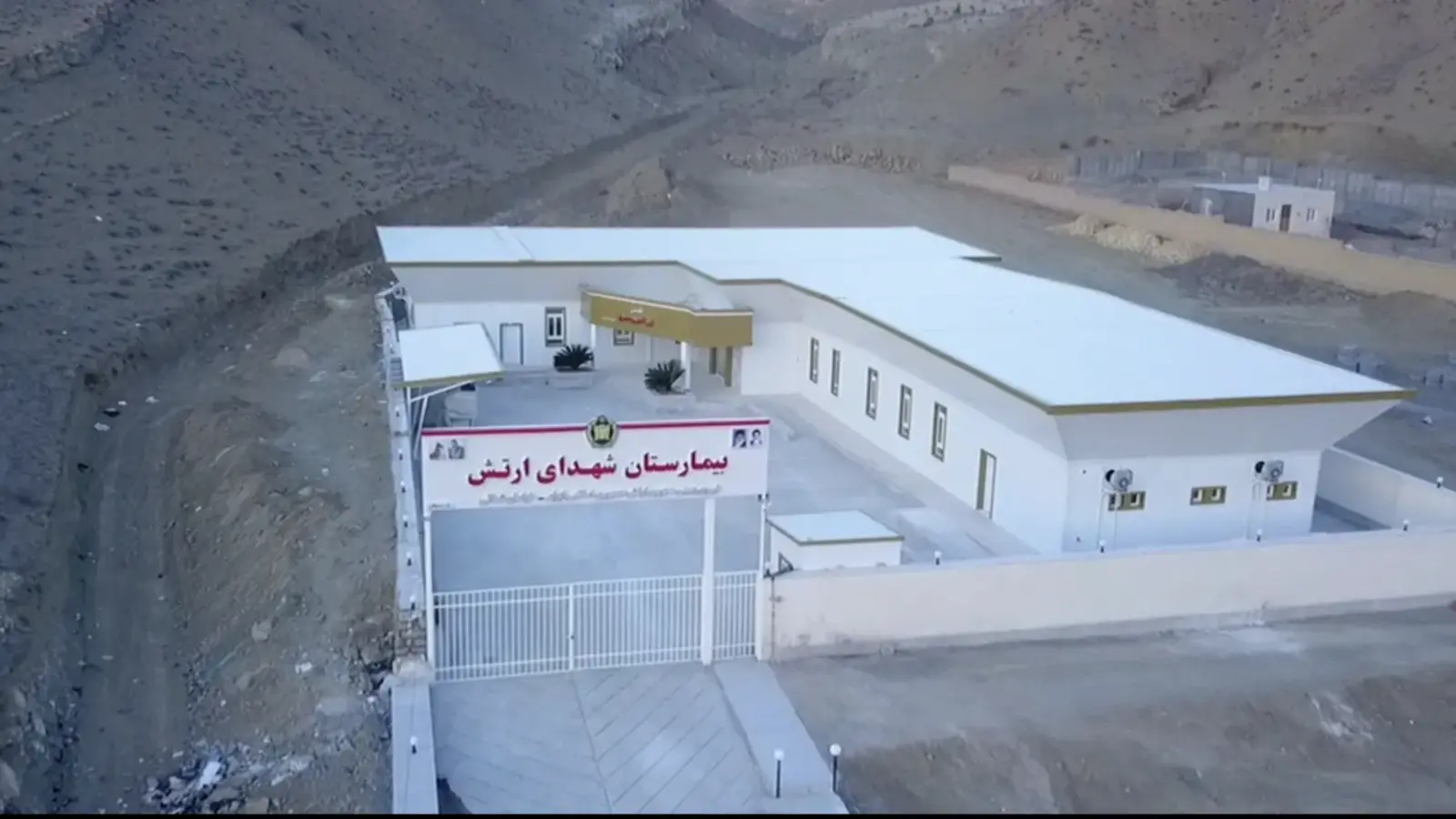
- During the COVID-19 emergency, a fully operational 32-bed military hospital was needed from excavation to readiness in under 50 days, requiring full EPC coordination.
- Engineering decision
- Engineering teams coordinated full EPC delivery — from excavation and structural construction to sandwich panel envelope, internal partitions, and final readiness — within an emergency timeline.
- Result
- A fully operational 32-bed military hospital was delivered from excavation to readiness in less than 50 days during the COVID-19 emergency.

Ahvaz Airport Passenger Terminal
Ahvaz, Iran
- Challenge
- The passenger terminal included a curved front architectural feature where the covering had to bend in a perpendicular direction. That made geometry control, substructure alignment, aluminium panel layout, ZIP-TECH transitions, and final visual quality the main execution risks.
- Engineering decision
- The engineering decision was to control geometry first: define curved references, coordinate panel and roofing interfaces, then execute the covering without interrupting the architectural line.
- Result
- 4,000 m² of ZIP-TECH and aluminium cladding were executed while preserving the curved architectural form and final visual quality.

Mahshahr Taxi Parking Facility
Bandar Mahshahr, Khuzestan, Iran
- Challenge
- The parking facility needed a durable sandwich panel roof for a high-use transport environment in Bandar Mahshahr. The useful engineering challenge was not only panel supply; it was keeping rainwater movement predictable through slopes, gutters, flashings, downspouts, and sealed transitions in a coastal climate.
- Engineering decision
- The engineering decision was to treat drainage as part of the roof system instead of a later accessory. Slopes, water-flow paths, gutter locations, and panel alignment were coordinated before installation.
- Result
- A 4,000 m² sandwich panel roofing system was delivered with coordinated rainwater management and controlled weather-protection detailing.

Kermanshah Industrial University Petroleum Faculty
Kermanshah, Iran
- Challenge
- The petroleum-faculty building required structural glass facade connections that could tolerate relative movement in the primary structure and reduce the risk of transferring displacement into brittle glass panels.
- Engineering decision
- The engineering decision was to separate glass performance from uncontrolled structural movement by using connection details that reduce stress transfer into the panels.
- Result
- Approximately 1,000 m² of structural glass facade was executed. The project record states that the facade reportedly remained without glass damage during the Kermanshah earthquake in the 1390s Solar Hijri decade.
Need a hangar or large-envelope review?
Send hangar geometry, roof-wall interface, or panel layout drawings so SIPANEL engineering can review sequencing and envelope-risk controls.